Good morning! You are reading this as I work from my dining table, most likely. I’d like to be a person that posts up at a nearby coffee shop, cortado in hand, and then, when 5 p.m. hits, shut my laptop and grab a glass of wine as the cafe transitions to nighttime mode. But the all-day bar thing has ruined many a work day for me, either because of lack of outlets, uncomfortable spaces or too much noise. When my Eater colleagues told me about Cuties, in Portland, Maine—a unicorn all-day spot that actually manages to get it right—I had to learn more.
Nicholas Mancall-Bitel, dining and travel editorial manager at Eater, interviewed their team to see how they do it. Read on for their insights, plus some hot takes on The Bear, delivery service and more. |
—Mary Anne Porto, senior editor |
|
|
How Cuties Transitions From Day to Night, Seamlessly |
In theory, all-day bars are perfect for customers and operators. Guests can chat with a friend over coffee at 11 a.m., work on their laptop while nursing a beer around 4 p.m., and slide right into date night without ever leaving their seats. Owners get to maximize retention, gaining three customers for the price of one. In reality, though, all-day bars often feel chaotic, as services clash with one another: Dancey bar tunes blare at midday, or there isn’t adequate food for lunch, or an airy cafe space doesn’t fit the evening vibe.
But the team at Cuties, an all-day bar in the Old Port neighborhood of Portland, Maine, has figured out the formula. Here, partner Bryce Summers and chef-partner Ryan Nielsen share how they did it. |
Cuties goes from a high-volume coffee shop in the morning to full bar service at night. | Nate Davis |
How did the all-day bar concept at Cuties come about? |
Bryce Summers: We really saw a need for a space that served a lot more roles than a traditional cocktail bar, restaurant or coffee shop. There’s tons of really phenomenal options for all of those things in the Old Port and Portland as a whole. But there was really lacking a space that bridged the gap between them.
Portland went through this big boom right before COVID with the whole Bon Appetit Restaurant City of the Year thing. It really just kind of exploded in this (debatably unsustainable) way. The market became incredibly saturated. So taking a step back and looking at Portland and the neighborhood, we just asked ourselves: What do we wish was here? A place that is a little bit more dynamic in hours and offerings, and a vibe that’s pretty different. It's an ambitious undertaking in terms of scope, but it sets us apart in a big way and gives us a lot of opportunity to offer lots of different things. Your net gets cast a lot wider.
|
How does service shift throughout the day and night? |
BS: We initially imagined the services being way more distinct: The morning service being a lot of high-volume, grab-and-go coffee, very cafe-focused. Shifting pretty deliberately into a total-bar service at night.
As opposed to those really distinct services, it’s actually been this really cool, continual vibe throughout the day. We have lots of people coming in early morning, getting coffees, busting out their laptops, meeting with friends. As the day progresses, it gradually becomes more of an equal parts coffee-and-cocktail-focused service and then shifts over to explicitly more of a cocktail-and-wine-focused operation at night. |
How do you design the menus? Are they fluid as well? |
Ryan Nielsen: When we first opened, I tried to focus on cross-utilizing the menu and having similar things offered during the day and night. But we see people eating in different ways. During the day, people [order] breakfast or lunch individually, so we started to add more sandwiches and a smashburger.
And then it’s completely different at night. People come in with a date or a large group, and they’re all sharing and reaching across the table. At night people want crunchy things, they want cheesy things, they want potatoes. We had an aguachile on the menu since we opened; although that dish looked beautiful, it tasted great, and those who ordered it loved it, it wasn’t getting ordered regularly.
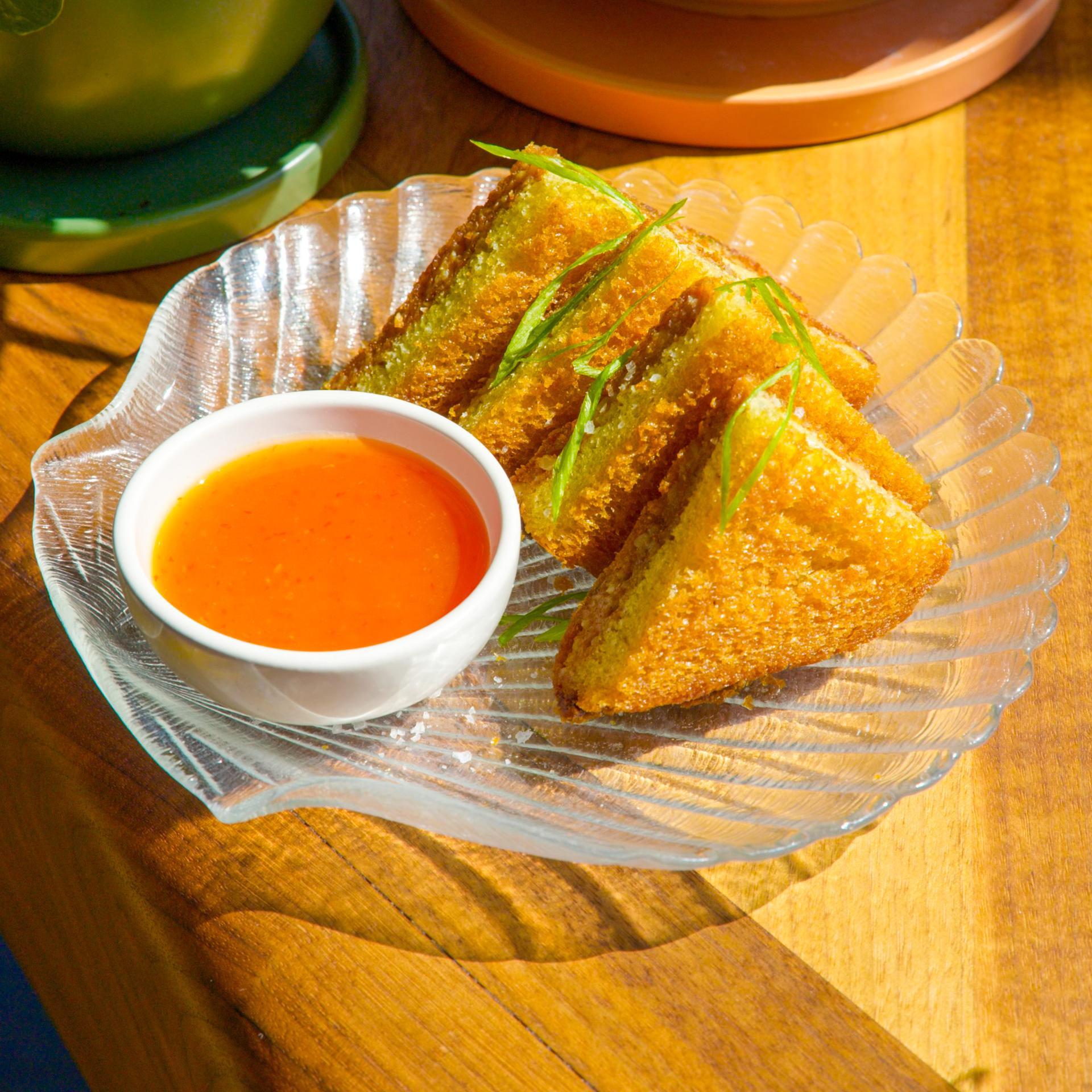
Though some of the dishes are different between services, I’m utilizing the same ingredients. At lunchtime, we have a fried shrimp roll on the menu, and then at night we’re doing Nashville hot popcorn shrimp. Trying to balance essentially three different services, multiple ways of eating, and different ways people are occupying the space has been a journey. |
What are some of the challenges running a business like this? |
BS: Shift change is always a little hectic at any restaurant or bar. Shifting from a lunch menu to a dinner menu — getting the coffee staff all closed out, basically doubling our beverage offerings, rolling out an entirely different food menu — is an ambitious undertaking, especially on a very busy Saturday in the middle of the summer.
Delineating hard lines between what’s available at what time is super important to that changeover. We hard-stop espresso-based drinks at 4 p.m., just so the daytime crew can break down the espresso machine. And same with flipping the line: When you get cooks coming in for nighttime service, it’s important that tickets aren’t still coming in for things they don’t have the mise for. |
How do you set the mood for different services? |
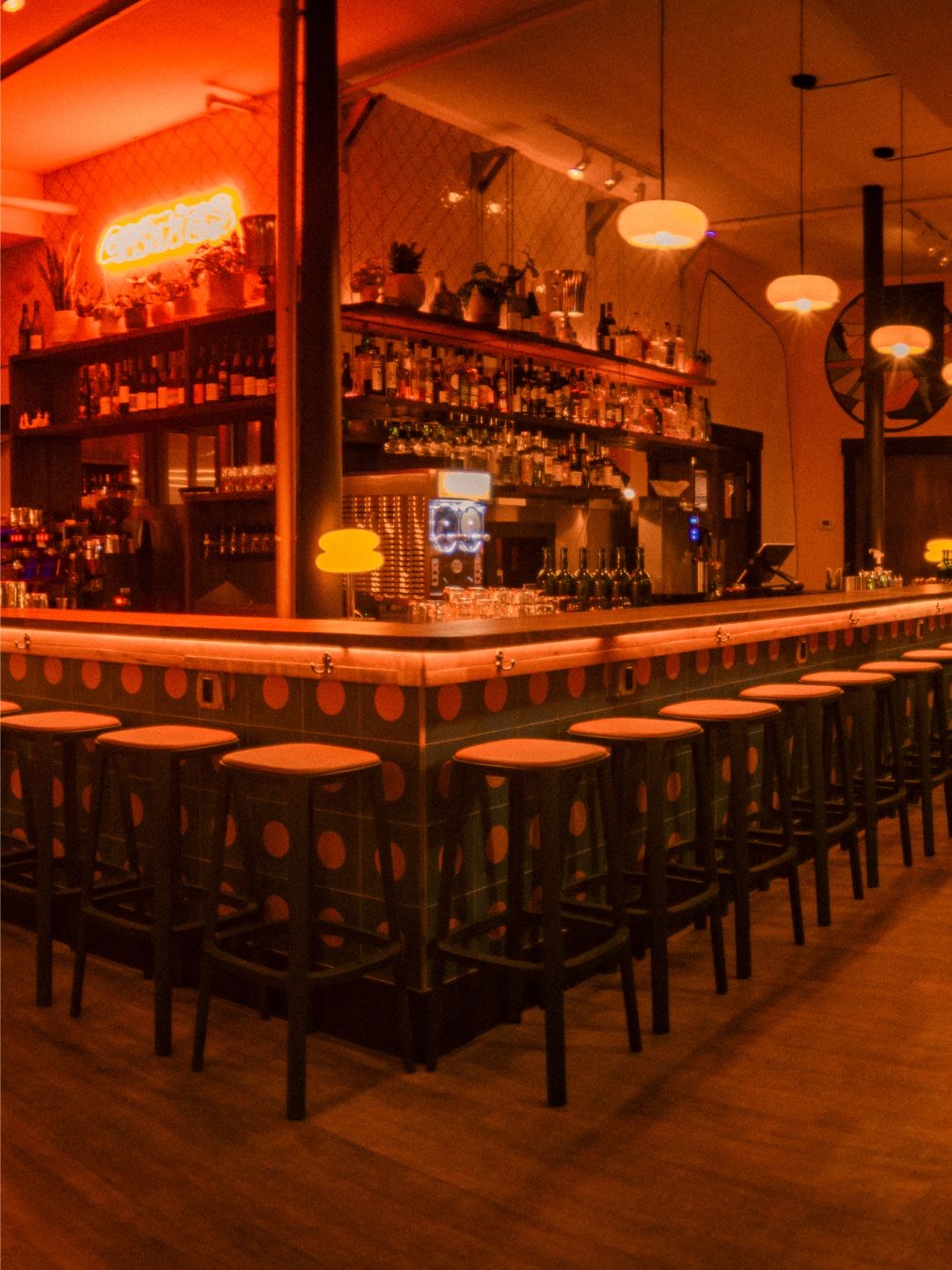
BS: The space itself plays a really big role. We have these beautiful floor-to-ceiling windows, so even when you’re inside the bar, the day is kind of shifting around you. We have a big orange neon light above the backbar. It’s a very “lights down, music up” sort of thing once the sun goes down.
We also spent a lot of time putting together playlists for the bar in preparation of opening. Daytime music is always going to be a little bit lighter, a little bit less loud, a lot of world music. Nighttime is a little bit more groovy and dancier. A lot of Italo disco. [Editor’s Note: Read on for these playlists at the end of the newsletter!]
The way people use the space gradually shifts along the course of the day. So we don’t worry about setting the tone. In the way people are interacting with the space—be it laptop work or a 12-person bachelorette party—the vibe takes care of itself. —Nicholas Mancall-Bitel, dining and travel editorial manager |
During the day, Cuties serves sandwiches and other lunch foods; at night, they transition to sharable snacks. | Anthony Harmon |
|
|
Season 2 of The Build follows Chef Rasheeda Purdie in real-time as she opens her next restaurant in NYC’s East Village. No retrospective success stories, just the actual pivots, challenges, and decisions that come with restaurant growth. Co-hosted by TILIT founders Alex McCrery and Jenny Goodman, and presented by Square, this 10-episode series captures the unfiltered reality of what it takes to scale as an independent restaurant owner. If you're in the industry, this one’s for you.
|
|
|
“From complimentary Champagne to personal serenades to special accommodation for an emotional support boa constrictor (not joking), nothing seems beyond reason.” John Winter, owner of Francie in Brooklyn, New York, says that Unreasonable Hospitality and The Bear have emboldened some diners—for the worse.
“Delivery saved us during the pandemic. Now they are killing us.” The Atlantic explains how Americans became so attached to food delivery, and what that has meant for restaurateurs, including one who says she “doesn’t know what hospitality is anymore.” |
|
|
Pre Shift is for the trade, and by the trade. We want to bring in your voices and hear your ideas. Have thoughts? Let us know by emailing preshift@voxmedia.com. If you like this email, please forward it to a friend. If you aren’t signed up for this newsletter, you can do so right here.
|
|
|
This email was sent to jess.mayhugh@voxmedia.com. Manage your email preferences for Eater or Punch or unsubscribe.
View our Privacy Notice and our Terms of Service.
Vox Media, 1701 Rhode Island Ave NW, Washington, DC 20036.
Copyright © 2025. All rights reserved. |
|
|
|