Battle election stress with a roni roll  ‌ ‌ ‌ ‌ ‌ ‌ ‌ ‌ ‌ ‌ ‌ ‌ ‌   ‌ ‌ ‌ ‌ ‌ ‌ ‌ ‌ ‌ ‌ ‌ ‌ ‌   ‌ ‌ ‌ ‌ ‌ ‌ ‌ ‌ ‌ ‌ ‌ ‌ ‌   ‌ ‌ ‌ ‌ ‌ ‌ ‌ ‌ ‌ ‌ ‌ ‌ ‌   ‌ ‌ ‌ ‌ ‌ ‌ ‌ ‌ ‌ ‌ ‌ ‌ ‌   ‌ ‌ ‌ ‌ ‌ ‌ ‌ ‌ ‌ ‌ ‌ ‌ ‌   ‌ ‌ ‌ ‌ ‌ ‌ ‌ ‌ ‌ ‌ ‌ ‌ ‌   ‌ ‌ ‌ ‌ ‌ ‌ ‌ ‌ ‌ ‌ ‌ ‌ ‌   ‌ ‌ ‌ ‌ ‌ ‌ ‌ ‌ ‌ ‌ ‌ ‌ ‌   ‌ ‌ ‌ ‌ ‌ ‌ ‌ ‌ ‌ ‌ ‌ ‌ ‌ 

View on web 

Nick Mancall-Bitel is a senior editor at Eater overseeing travel coverage. He manages Eater's international maps program, travel packages, and columns and reports on global cuisines.

Nick Mancall-Bitel is a senior editor overseeing Eater’s travel coverage. He didn’t eat pepperoni until he hit college but has since made up the deficit.

Well, that was quick. After weeks of speculation about how long it would take to count the votes, former President Donald Trump clinched it overnight. Maybe you’re celebrating or commiserating with leftover election cake. But if you prefer to stop up your emotional arteries with fat instead of sugar, might I suggest a roni roll?


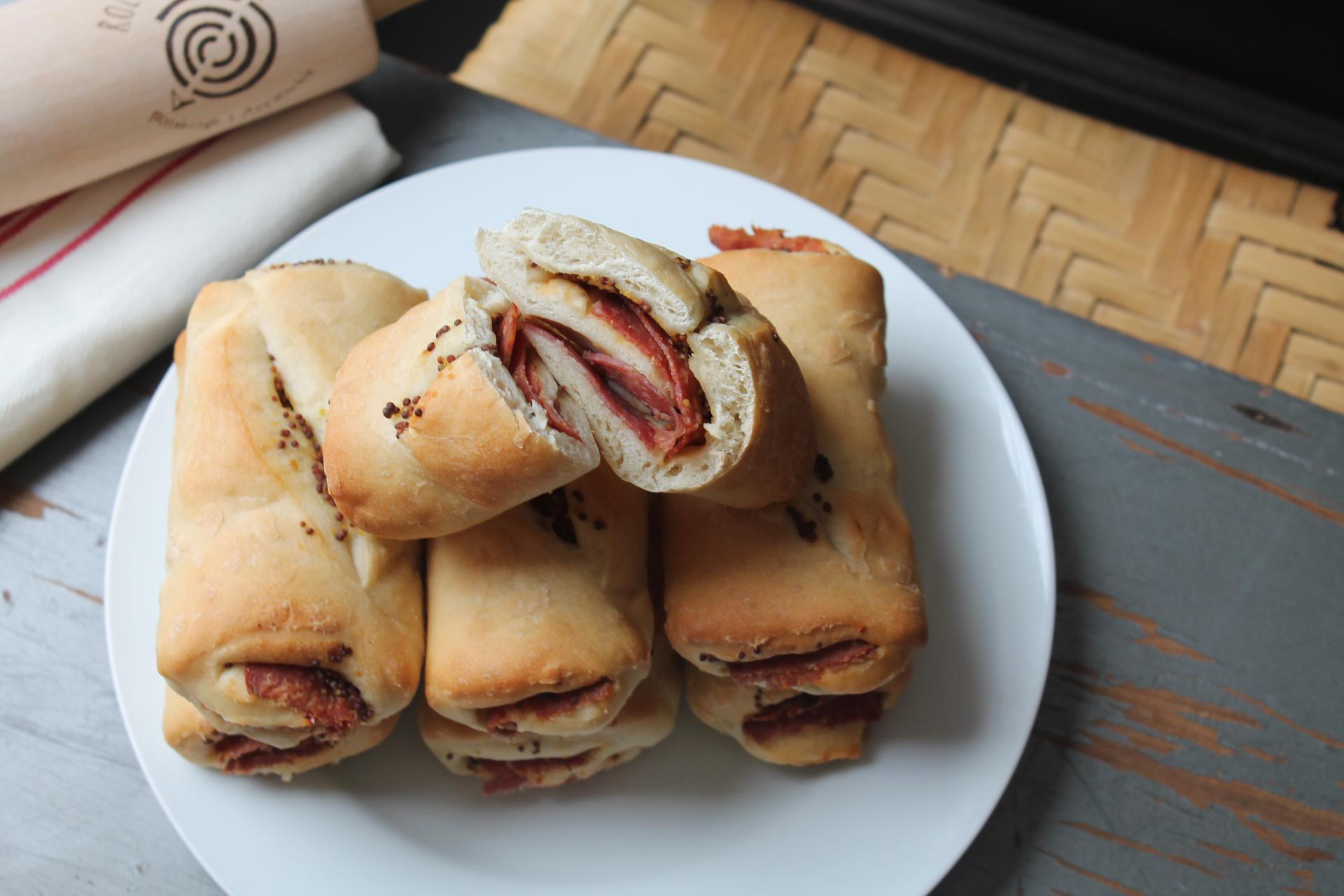
Last week, Danny Palumbo paid homage to this unassuming lunch staple, popular in his hometown of New Castle, Pennsylvania. “Something transcendent happens when slices of deli pepperoni are baked into a soft Italian loaf,” Danny writes. “The meat’s salt and fat seep into the bread, staining it a wonderful greasy orange.” 


Danny tracks down the best iterations of the dish all over the region, beginning with the original, invented by Giuseppe Argiro, a Sicilian immigrant and former West Virginian coal miner, in 1927. The roni roll has deep ties to Appalachia’s working-class history, and Danny turns up its kin across the Rust Belt’s mining communities, like the pasty in Michigan’s Upper Peninsula and the piggies (stuffed cabbage rolls) preferred by coal crackers in northeastern Pennsylvania. 


At first I thought the roni roll was evidence of a time before the Appalachian coal mining industry crumbled and manufacturing corporations pulled out of Rust Belt towns. The dish — and any lingering nostalgia for it — seemed like a natural fit in a narrative about Trump’s 2016 ascension, his selection of Mr. Appalachia JD Vance as running mate, and his win this time around. Though Vice President Kamala Harris also made a play for working-class voters in the region, the former president capitalized on a feeling among blue-collar residents (across demographic groups) that they have been deserted by CEOs and overlooked by political leaders.


“There is that sense of abandonment, unfortunately,” Danny said, when I asked him about this. “I see it everywhere [in New Castle]. You can feel it.” But, he added, “In Pennsylvania, I’m not so sure the pepperoni roll symbolizes the days of coal mines or steel mills. It’s absolutely a food for the entirety of the working class.”

Rolling Pepperoni

The blue-collar regions of the state are far more dynamic than postmortem political narratives usually acknowledge. Pennsylvania has been a political jump ball for years, and during this election cycle, some majority-Republican towns drifted blue while Democratic strongholds saw red. An election result doesn’t erase those crisscrossing trends.


Any tidy story of roni rolls and political economy doesn’t quite hold together either — and not just because a single food rarely maps accurately onto any diverse community. Danny’s picks for the greatest rolls include Argiro’s Country Club Bakery in Fairmont, West Virginia, but there’s also Mexicantown Bakery in Southwest Detroit, which offers a pepperoni-packed variation of stuffed bolillo rolls found at panaderías. And then there’s Pittsburgh’s Rolling Pepperoni, where baker Katt Schuler has made it a mission to challenge stereotypes about Appalachians with her creative pepperoni rolls and vegan artichoke heart rolls. “It has a reputation much in the same way that individuals from West Virginia have,” Schuler said of the roll. “It’s the same sort of preconceived notion about who we are, what type of person we are, and what we do or do not deserve.”


Looking back at this election, it might be tempting to see it as a fight between one version of working-class America that’s right and one that’s wrong, but that ignores a lot of built-in complexity. No political candidate, when seizing on a particular aspect of identity, owns a voter’s whole story. Any bakery can encapsulate an idea of a roni roll, but none completely owns the dish.


“Anyone who wants to claim [the roni roll], can,” Danny told me. “And the more people who do, the more the narrative around Appalachia changes into something that's more empathetic and inclusive.”


Where to eat right now:

Get your kicks (and green chile cheeseburgers) on Route 66

$2 barbacoa tacos and elote danishes join the essential bites in Albuquerque.

READ MORE →

Mexicali is Baja California’s underrated culinary star

Char siu and carne asada mix in the city’s Chinese Mexican communities.

READ MORE →

Links for the road:

  • If our democracy crumbles into an authoritarian monarchy, save me a giant turkey leg.
  • Better yet, let’s move to Canada. Or Candy City.
  • Wanna concha! Don’t you wanna?
  • A tale of love and Haiti.
 
 
Learn more about RevenueStripe...
 
FacebookTwitterInstagram

This email was sent to nicholasmancallbitel@gmail.com. Manage your email preferences or unsubscribe.


View our Privacy Notice and our Terms of Service.

Vox Media, 1701 Rhode Island Ave NW, Washington, DC 20036.
Copyright © 2024. All rights reserved.